Friday, February 17, 2012

In response to Brooke's post

Brooke talks about Tide's new product and the accompanying marketing campaign. These new 'Tide Pods' have detergent, softener and stain remover all in an easy to use, single use pod. She asks:
Do you think this campaign is going to be successful in targeting the younger audience by using these phrases and colors in the ads? Will people be open to trying something new or just stick to their usual detergent?
My first thought is that this is defiantly something that is targeted to young adults, especially those who do not like to do laundry. I can see parents sending their kids to college with these, just as I was given detergent/dryer sheet combos (despite an extensive knowledge of how to laundry). People like convenience, and I can see how this will cater to that.

I don't see people making the switch however. Products like these have, in the past, been more expensive than regular detergent, and get used up more quickly. Since you are being given pods, and not liquid, you get less detergent really. While the idea of a premeasured amount of detergent is great, I can't see people on a budget making a switch. There's also no generic for this. Many brand name companies make generic store brands that cost less. A product like this will have no generic supplement.

I do think it is possible that there will be an initial rise in these pods. College kids will enjoy them for the ease. Working parents may also want them. However, I don't see people making a permanent switch. In the NY Times article Brooke cited, it talked about bringing innovation to the industry and "Apple Envy".
Giants like Procter, Clorox, Reckitt Benckiser and Unilever are seeking to continually deliver distinctive new products that pique the curiosity of consumers who dote on high-technology items like smartphones and tablets.
However, if all that's happening as piqued curiosity, one has to wonder what the staying power of the product will be. And honestly, I don't think of my laundry when I think of technological innovations. I believe trying to draw parallels between high-tech items and laundry isn't the smartest idea.

People stick to what they know. People like routine, and dislike change. That's my opinion. What do you think of the ads? Can a product like this have any real staying power? Is it a good idea to cash in on people's love for the high tech, or will this just fall flat? 

Thursday, February 16, 2012

How effective is marketing on Facebook?

Like many other people my age, I spend a decent amount of time on the internet on Facebook. It's on my laptop and my phone, saved into my bookmark bar with my login information already saved so I can log on at a moments notice. Just like everyone else, my news feed has ads on the side of it. Right now, there's ads for Wendy's, engagement rings, a closed-captioning service, Cheez-Its, shoes and a targeted ad for Kohl's employees. 


I just ignore all these, as I'm sure most people do. However, plenty of companies advertise on Facebook. Many have fan pages, groups or just regular accounts. While these sidebar ads might be easily ignored, how effective are these regular pages? Does thousands of fans equal any measurable sales or increase in services?

According to a study done by Rice University, yes, it does. Facebook marketing is very effective. They "surveyed customers of Dessert Gallery, a popular Houston based cafe chain". Over a 3 month period, 1,700 fans were compared to the typical customer, and the following was deduced.

The Facebook fans:
    • Made 36 percent more visits to DG's stores each month.
    • Spent 45 percent more of their eating-out dollars at DG.
    • Spent 33 percent more at DG's stores.
    • Had 14 percent higher emotional attachment to the DG brand.
    • Had 41 percent greater psychological loyalty toward DG.
Those statistics translate into dollar signs for the company. Considering Facebook is a free service, this is a low cost way to increase knowledge of your company, as well as increase profits.

While social media marketing is not as effective with the older generation, it certainly is popular with the tech-savvy generations. Coupons and other bargains, offered exclusively through Facebook, often keep customers coming back.

Do you follow any particular companies on Facebook? If so, do you feel more connected or more likely to interact with that company because of their Facebook page? Do you think Facebook marketing is an effective strategy for companies?

Thursday, February 9, 2012

In Response to Todd's post...

Todd talked about the following GM add that aired during the Super Bowl this year.


His question in regards to the commercial is whether the add goes too far, and if the statements made by GM about their trucks are false advertising.

First, I think the commercial is very well done, and quite clever. They covered just about every apocalypse theory out there.

I do think GM crossed a line though. If they had stopped the dialogue at "most dependable, longest lasting full-size truck on the market", and left out that Dave drove a Ford, there would have been no issue with the commercial. As soon as GM decided to name what truck Dave drove, they were targeting someone, clearly with the intent to place themselves above Ford.

Whether or not GM's trucks are better than Ford's also comes into debate. I don't know the statistics, but both trucks have followings, and neither has been in the news for recalls, so I can only assume they are both decent trucks. The commercial is really just a fun poke at Ford, but certainly should not be something companies should do on a regular basis.

What do you think about the ad? Have there been any other commercial-based 'scandals' like this?

Dr. Pepper 10 Commercial

When you think about diet soda and who drinks it, the first group of people that comes to mind is middle aged women. That's what soda companies have found is their main customer base too. According to the 2010 US Census, there are 122.5 million people between the ages of 35 and 65. 49% of those people are male, and 51% are female. Even though an even smaller portion of those groups drink diet soda, that still means that soft drinks like Diet Dr. Pepper are missing out on half the target population.


It makes sense to any company that missing half of the population is not a good thing. It makes sense to target that group of people to expand your market. What doesn't make sense to me is to isolate and insult the half of the market you do have with the previously mentioned new add campaign.


Personally I don't drink soda anyway, but I can't help but feel, if I did like Diet Dr. Pepper, I wouldn't after seeing this. The Vice President of marketing at Dr. Pepper says, "Women get the joke." Well, I'm a woman, and I don't get it. To me, all I see when I watch the commercial is antiquated gender roles, both male and female. I like action movies. There's men that like "romantic comedies and girlie drinks".

Looking at this commercial, there's the obvious stereotyping of women, but there's also male stereotypes. Not all guys, straight, gay or anywhere else on the spectrum, like the 'manly' things that this commercial is showing, so not only is the female demographic now turned off by this product, but a good portion of the male population as well. I think this was a terrible choice for a marketing campaign.

Some people are saying that the controversy generated is enough to cope with the backlash, but news and buzz don't equal sales. Their attempt to make their commercial go 'viral' on the internet doesn't necessarily mean they'll sell more soda. What will affect there sales is the way consumers feel about this commercial and its blatant stereotypes, both male and female.

What do you think about this commercial and the direction Dr. Pepper choose for its marketing? Is any press good press?

Source
Source

Sunday, February 5, 2012

In Response to Nichole's post...

Nichole talked about the phrase "People don't know what they want, they only know what they know." She asked if any other examples of where marketers have shaped consumer wants and needs.

The first thing that came to mind is infomercials. Ads for things like Sham-Wow, Oxyclean and all those other products. They go as far as to demonstrate their product to prove it's worthiness and usefulness to you and your family. After seeing the infomercial, you'll wonder how you ever lived without this glorious product in your life.

Once you get it home, it's a whole other story. You've already shelled out at least one payment of $19.95, plus shipping and handling. Maybe you even got your order doubled because you called in the next 10 minutes. So now you have not one, but two, terrible products in your possession.

The best way to prevent this scenario from happening is to check out consumer reports or reviews. Marketers have the job of making us want something and want it enough to buy it. You can't sell a product if you say that it's only effective for a few uses, or it chews through batteries or whatever other downfall it may have. That being said, it doesn't make it right to sell a shoddily made product, under the guise that it is well made. Since that's more of a moral obligation than anything else, there most likely won't be a movement in honesty and product integrity.

What are some of your experiences with products vs. the advertised product? Ever bought something that was nothing like what you were lead to believe?

Monday, January 30, 2012

Brand Recognition

I saw an interesting video today, and it got me thinking. We see tons of logos everyday. The ones we're familiar with we immediately pair with the corresponding company. We don't think about the design of the logo; instead we see the company.

Since we see so many logos and brands every day, have you ever wondered how early we begin to associate logos and companies together?
The little girl speaking in that video is 5 years old. I'm sure you noticed that she was able to name quite a few of the brands, most on purpose. She did accidentally identify the Chili's logo, but still, she was able to piece it together. Besides being able to match up what company goes with what logo, the girl in the video also made a few points that I'm sure would make graphic designers and company executives very happy: she associated the logos with other relevant, cultural icons and feelings. 

When she saw the Bank of America logo, she said it looked like an American flag. That, of course, was not on accident. When she saw the McDonald's logo, she said it looked like french fries. Each of these logos is supposed to remind us of something else, or give us a feeling about the company. When you see the silver, shiny Apple logo, it looks like something from the future. When you see the GE logo, it looks like something from the past, and you might be reminded of stability and longevity, even if that's not the case. 

Being able to brand a company with a single symbol means increased marketability. Instead of text and lots of pictures, all you need is that logo. That makes it easier for companies to advertise and market their product. It's a way for the company to make connections to other icons in society.

Taking a look at some of the logos in your life, what do you see besides the company? What is it that the company wants you to associate with their brand?   


Saturday, January 28, 2012

In response to Rachel's post

Rachel talked about the 5 Things Every Entrepreneur Should Know about Marketing, and posed the question, "Can you think of a company that didn't follow these guidelines, and failed because of it?"


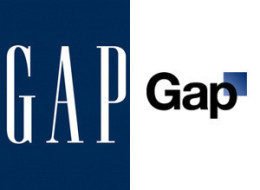
After reading the post, I couldn't help but be struck, once again, by how important branding is to a company. I remember last year, or possibly the year before, when Gap attempted to change their logo that they have had for year and years. 
Old logo on the left, new on the right.
The response to the new logo was terrible! They immediately changed back to their old logo. It just goes to show that a group of customers can be fiercely loyal to something as a logo.


The same can be said of Facebook users. How often does the layout change, and all us users complain about the new layout? How many petitions get started to change things back to the way they were? It only takes a few weeks before we've all adjusted and forgotten about our hatred for this new layout. 


Getting back to what you asked, the biggest failure that I can think of is the Netflix/Qwikster ordeal that happened last year. Netflix, in an attempt to create separate companies for their streaming and rental services, decided to split the company into two separate ones. This was a terrible, terrible idea. The reasoning behind the split made sense on a business level, but not on any other. In order to cope with the rising cost of licensing online material and focusing efforts on acquiring said content licenses, Netflix would become a online streaming only service, while Qwikster would be for mail-in DVD rentals.
Bad idea on top, good idea on bottom.


As a Netflix user, I was not looking forward to that split. I didn't like the idea of having to menage two queues full of DVDs. Since I still like the mail in DVD service, I didn't want to have to pay two separate companies for those services, and that's what Netflix was basically forcing all it's users to do.


With a lot of customers already upset over the price hike from the summer (a $7 [50%] increase for the 1 DVD at a time, unlimited streaming service), the remaining customers were infuriated. Because of the announced split, Netflix reported a loss of 800,000 members that quarter. That's a lot of money, and a lot of unhappy customers! 


My point with this whole long explanation is that Netflix didn't understand their brand, their customers, or their market. What their customers want is a cheap, easy way to watch and rent movies. What those customers don't want is two separate services. Fortunately, CEO Reed Hastings realized his mistake and announced that Netflix won't splint into two companies. Unfortunately, he didn't all his customers back.


What's your opinion on Netflix and their mistake? Have their been any other companies who made near fatal mistakes?


Source: Netflix blog
Source: NY Times
Source: Huffington Post